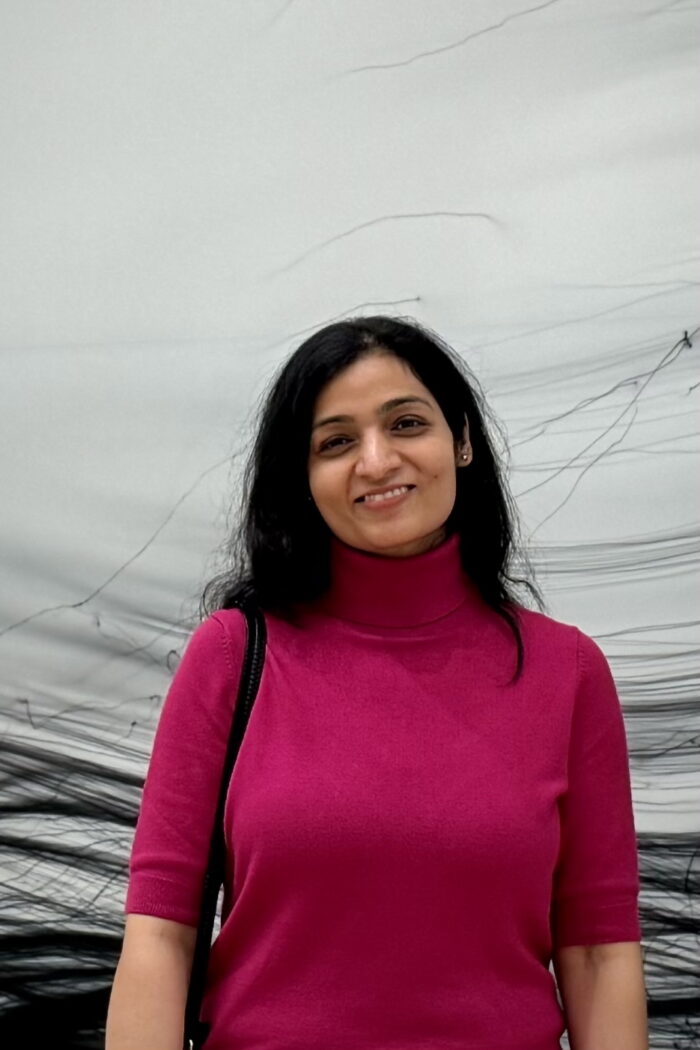
PI: Prof. Priyamvada Jadaun
Chair Professor
Electrical Engineering and Computer Sciences
Technical University of Berlin, Germany.
Prof. Jadaun holds the Chair Professorship in Semiconductor Components and Microelectronic Systems (SAM) at TU Berlin. She received her B.Tech. in Engineering Physics from IIT Bombay, an M.A. in Physics and a Ph.D. in Electrical and Computer Engineering from The University of Texas at Austin. She held postdoctoral positions in Applied Physics at Cornell University and in Electrical and Computer Engineering at UT Austin, and worked in industry at imec and Applied Materials.
She computationally designs materials in which sensing and computation are implemented through the material’s own physical dynamics. Her work spans quantum sensing and bio-inspired computing.
Her contributions include the computational design of a self-adaptive, context-aware neuron that computes through its material dynamics (PNAS Nexus, 2022). The neuron implements higher-order computational functions such as context-awareness, cross-frequency coupling, and feature binding. She uncovered the microscopic origin of the Dzyaloshinskii–Moriya interaction in magnetic bilayers and predicted new systems with DMI values up to twice those previously known (npj Computational Materials, 2020). She derived rational design principles for giant spin Hall effect in transition metal oxides and predicted that antiperovskites could achieve values an order of magnitude beyond any known oxide (PNAS, 2020). Her earlier work established a connection between electric polarization and topology.
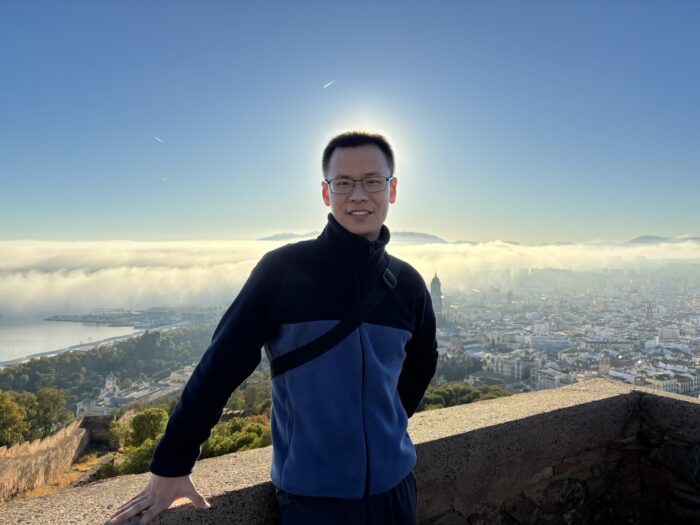
Zhishuo Huang
Postdoctoral Researcher
Research Fellow, NUS.
PhD in Chem., KU Leuven.
MS in Mat. Sc., UESTC.
BS in Microelec., UESTC.
Linked In
Google Scholar
Zhishuo is interested in developing a theoretical understanding of various physical phenomena using first-principles simulations, with a particular focus on electron-phonon interaction and exchange coupling in complex materials. He is dedicated to developing new concepts and computational tools to accelerate the discovery and understanding of functional materials and devices for quantum technologies. At SAM, his work centers on materials and device design for quantum bio-sensing.
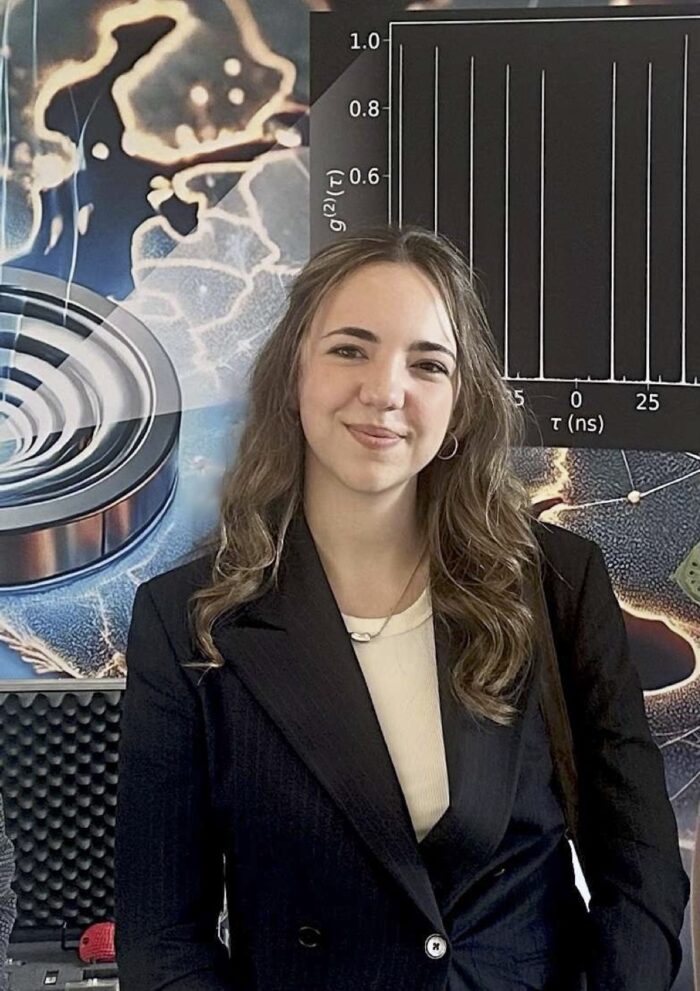
Anita Lalem Bayraktar
Student Assistant
BS in Physics, TU Berlin.
Linked In
Anita is studying physics at TU Berlin and is deeply interested in computational design of novel materials as well as biotechnology and quantum science. At the SAM group, she works on DFT simulations of polar vortices in twisted oxide membrane heterostructures. Originally from Istanbul, Turkey she is currently enjoying student life in Berlin.
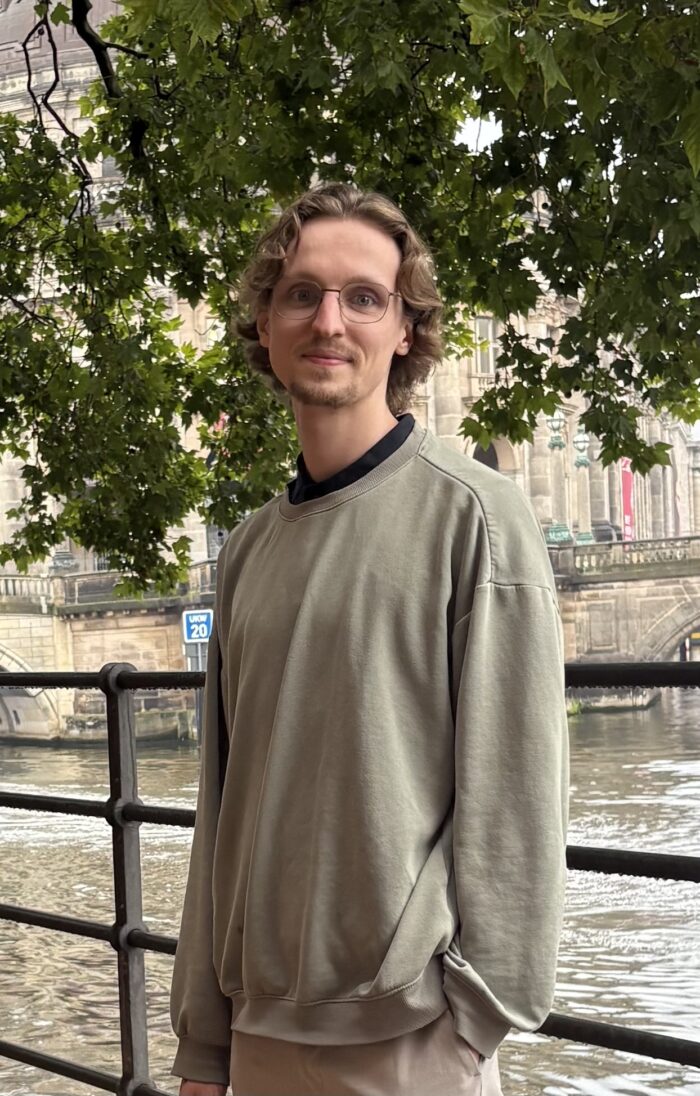
Ruben Baumgarten
Student Assistant
MS in Physics, TU Berlin.
BS in Physics, TU Berlin.
Ruben has completed his bachelor’s degree in physics from TU Berlin, and is now pursuing his masters. He is deeply interested in the physics of complex condensed matter systems and likes to utilize analytical models, as well as simulation tools, to study the properties of such systems. He is fascinated by quantum mechanical phenomena, particularly for solid-state applications, where one can tune material parameters to reveal unexpected behaviors.
At SAM, Ruben is working on the computational design of novel materials for quantum bio-sensing. Beyond physics, he enjoys reading nonfiction on a wide range of topics from economics to computer science. He also enjoys jogging in his free time.